How Brewery Adjunct Syrup Specifications Differ From Confectionery Syrup Specs
For a syrup plant, brewery adjunct and confectionery syrups can look similar on a loading schedule: starch in, conversion, filtration, evaporation, tanker out. But the buyer is not asking for the same performance.
A confectionery customer often buys texture, sweetness, solids, color, and handling behavior. A brewer buys predictable extract contribution, fermentability, low process drag, and repeatable wort performance. That difference changes how you define the spec, how tight your conversion window needs to be, and how much value you get from a dependable enzyme program.
For a brewing adjunct syrup manufacturer, the commercial issue is simple: fewer off-spec tankers, fewer slow loads, and fewer phone calls from breweries asking why attenuation or process viscosity moved. The enzyme program should support that outcome batch after batch.
BrixPilot works with plants that need practical enzyme supply for starch conversion, liquefaction stability, saccharification control, viscosity reduction, and fermentability targeting. If you are evaluating an enzyme supplier for brewing syrup production, the starting point is not just price per drum. It is whether the enzyme system helps hold the syrup inside the buyer’s operating window.
Same base material, different buyer logic
Both brewery adjunct syrups and confectionery syrups may start with corn, wheat, rice, or other starch streams. Both may use liquefaction and saccharification. Both may be sold on solids, appearance, microbiological condition, and tanker hygiene.
The difference is what the syrup must do after delivery.
Brewery adjunct syrup is an input to fermentation
In a brewery, adjunct syrup enters a controlled process where fermentable carbohydrate profile matters. The brewer is looking for consistent extract contribution, predictable attenuation, manageable wort viscosity, and minimal disruption to yeast performance and filtration.
The syrup is judged by how it behaves in the brewhouse and fermentation cellar, not by mouthfeel in a finished candy or sauce.
Key brewery-facing expectations often include:
- Consistent Brix or solids for extract accounting
- Controlled dextrose equivalent and carbohydrate distribution
- Fermentability aligned to the brewer’s recipe target
- Low and repeatable viscosity for pumping, blending, and dosing
- Minimal haze-forming or filter-loading residues
- Neutral color and flavor impact
- Clean tanker handling with reliable unload times
- Stable performance across crop, starch, and seasonal changes
Confectionery syrup is a texture and sweetness component
Confectionery applications usually value a different balance. The syrup may need body, chew, humectancy, sweetness curve, gloss, binding, controlled crystallization, or freeze-thaw behavior. Viscosity may be a feature, not a problem. Higher body and specific saccharide patterns can be desirable.
That means a syrup that is ideal for candy, bakery filling, or coating can be poorly matched to brewing if it brings too much viscosity, too much unfermentable carbohydrate, or unpredictable attenuation.
Specification differences that matter on the plant floor
1. Fermentability is central for brewing
A brewery adjunct syrup specification usually needs a clear fermentability target. The brewer wants the syrup to contribute extract that yeast can use in a predictable way. If fermentability drifts, the brewery may see movement in final gravity, alcohol yield, attenuation, or residual sweetness.
For syrup production, this makes saccharification control critical. Glucoamylase and debranching enzyme selection can influence how completely starch fragments are converted into fermentable sugars. The plant needs an enzyme system that responds consistently across real production conditions, not only in a clean lab demonstration.
Confectionery specs may focus more on sweetness, body, crystallization behavior, or total solids. Fermentability is usually not the controlling performance metric.
2. Viscosity tolerance is usually lower for brewery supply
Breweries need adjunct syrups that unload, meter, blend, and rinse predictably. A syrup that is too viscous can slow tanker discharge, create dosing lag, stress pumps, and complicate inline blending. It can also affect how the syrup disperses in wort or process water.
In confectionery, viscosity may support finished-product body. In brewing, viscosity is typically a constraint to control.
Liquefaction enzyme performance has a direct role here. A reliable alpha-amylase system helps reduce starch slurry viscosity early, supports heat transfer, and keeps downstream transfer more stable. If liquefaction is incomplete or inconsistent, the plant may face filter pressure rise, longer cycle times, and higher risk of off-spec texture in the final syrup.
3. Carbohydrate profile must match the brewer’s attenuation target
Two syrups can have similar Brix and still behave differently in fermentation. The distribution of dextrose, maltose, maltotriose, and higher saccharides affects how the brewer’s yeast sees the adjunct contribution.
For brewing syrup production, the spec should not stop at total solids. It should define the functional carbohydrate profile needed for the customer’s process.
This is where enzyme pairing matters. Liquefaction sets the substrate condition. Saccharification determines conversion depth. Debranching can improve conversion of branched starch fragments where the target requires a more fermentable syrup. The supplier’s job is to help the plant keep that conversion profile repeatable under normal production variation.
4. Filtration and clarity carry different consequences
Confectionery customers may accept certain levels of body, color, or minor haze if the syrup performs in the finished product. Brewers are more sensitive to components that increase filter load, haze risk, or process variability.
For the syrup manufacturer, poor conversion can show up as:
- Slower filtration on the syrup line
- Higher differential pressure across filter media
- Cloudier intermediate streams
- More frequent cleanouts
- Longer batch cycle time
- Higher risk of customer complaints after delivery
A brewery adjunct syrup should be built around conversion completeness, practical filtration behavior, and consistent tanker presentation.
5. Color and flavor neutrality are usually tighter
Confectionery formulations can sometimes accommodate color, cooked notes, or flavor contribution. Many brewing adjunct applications require a more neutral input. The syrup should contribute extract without pushing color or flavor outside the beer’s target.
This does not mean every brewery wants the same syrup. It means the syrup plant needs good control over process severity, hold time, pH, and temperature. Enzyme reliability supports that control because it can reduce the temptation to compensate with harsher processing when conversion is slow.
6. Tanker consistency is part of the specification
The spec is not only what leaves the evaporator. It is what the brewery receives and unloads.
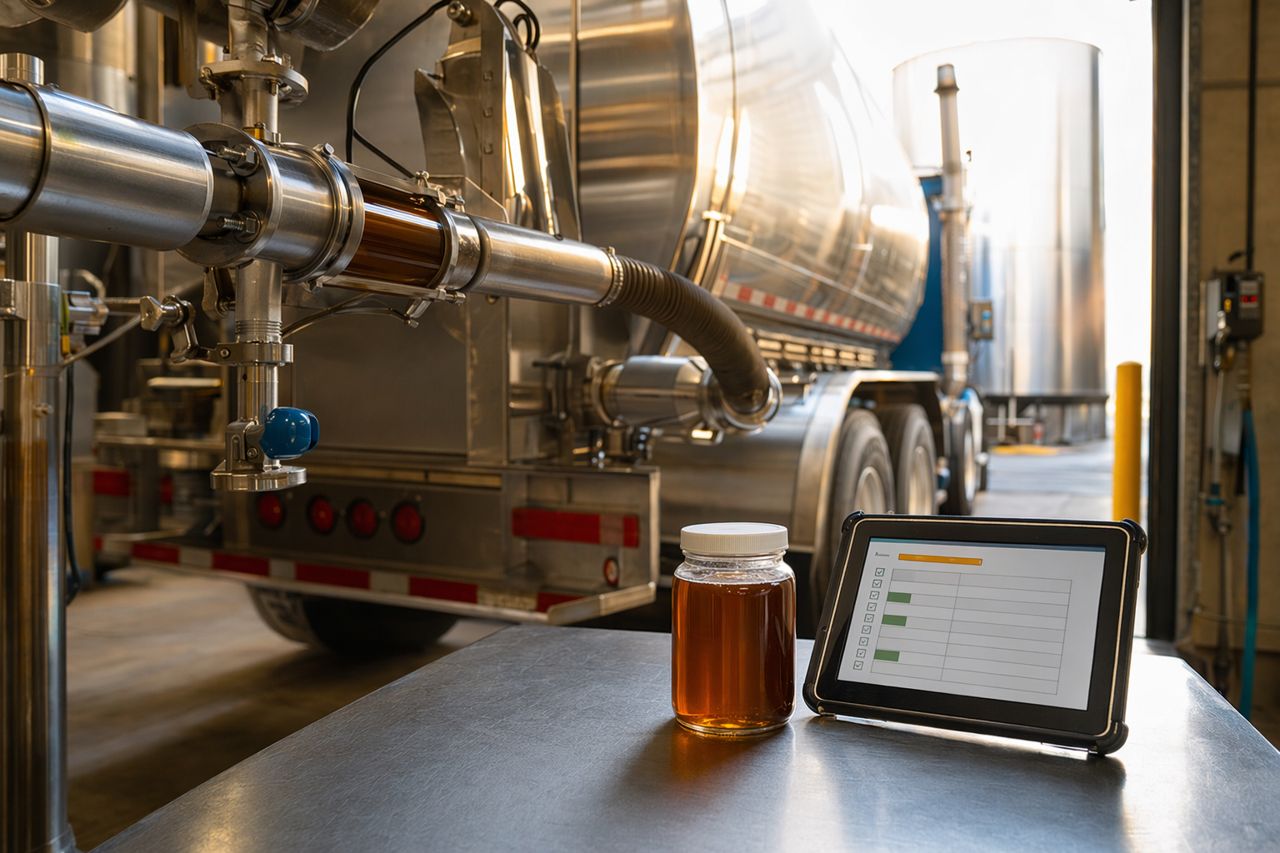
For brewery adjunct syrup, tanker-to-tanker consistency affects scheduling, extract accounting, and production confidence. A tanker that unloads slowly, arrives out of viscosity range, or performs differently in fermentation can disrupt the brewer’s plan.
A practical enzyme program helps protect the loading window by improving repeatability in:
- Liquefaction viscosity
- Saccharification endpoint control
- Final Brix adjustment
- Filtration behavior
- Pumpability at loading temperature
- Batch-to-batch conversion profile
What this means for enzyme selection
A plant supplying brewery adjunct syrup should evaluate enzymes against operating outcomes, not only purchase cost. The right enzyme system should help the plant run stable conversion at commercial scale and recover quickly when incoming starch quality changes.
Useful selection questions include:
- Does the liquefaction enzyme maintain low viscosity under our actual cook profile?
- Can saccharification be held inside the customer’s fermentability window without excessive hold time?
- Does the enzyme program reduce filtration pressure and cycle variability?
- Is dosage practical for plant operators and repeatable across shifts?
- Can the supplier help troubleshoot pH, temperature, residence time, and substrate changes?
- Does the program support fewer rework decisions and fewer off-spec tankers?
For BrixPilot, the right answer is a supply program that fits your tanks, your control system, your starch source, and your customer specifications. A spreadsheet enzyme quote is not enough if the syrup still moves outside the buyer’s process window.
Brewery adjunct syrup spec checklist
When building or revising a brewery adjunct syrup specification, consider separating the document into commercial, analytical, and operational sections.
Commercial and delivery terms
- Product name and intended brewing use
- Target solids or Brix range
- Tanker loading temperature range
- Shelf life and storage guidance
- Lot traceability and documentation requirements
- Microbiological and hygiene expectations
Functional syrup performance
- Fermentability target or range
- Carbohydrate profile expectations
- Viscosity range at defined handling condition
- Clarity or filtration expectation
- Color and flavor neutrality requirements
- Consistency requirements across lots
Plant control points
- Liquefaction pH and temperature control window
- Saccharification control window
- Hold-time expectations
- Filtration performance indicators
- Evaporation and final solids adjustment
- Tanker release checks before shipment
The more clearly these points are defined, the easier it is to choose and manage the enzyme program behind them.
Where confectionery specs can mislead a brewery supply program
A common mistake is assuming a successful confectionery syrup line can supply breweries with minimal adjustment. Sometimes it can. Often, it cannot without tighter control.
Confectionery syrup experience may hide brewing risks such as:
- Accepting viscosity that is too high for brewery unloading and dosing
- Prioritizing body over fermentability
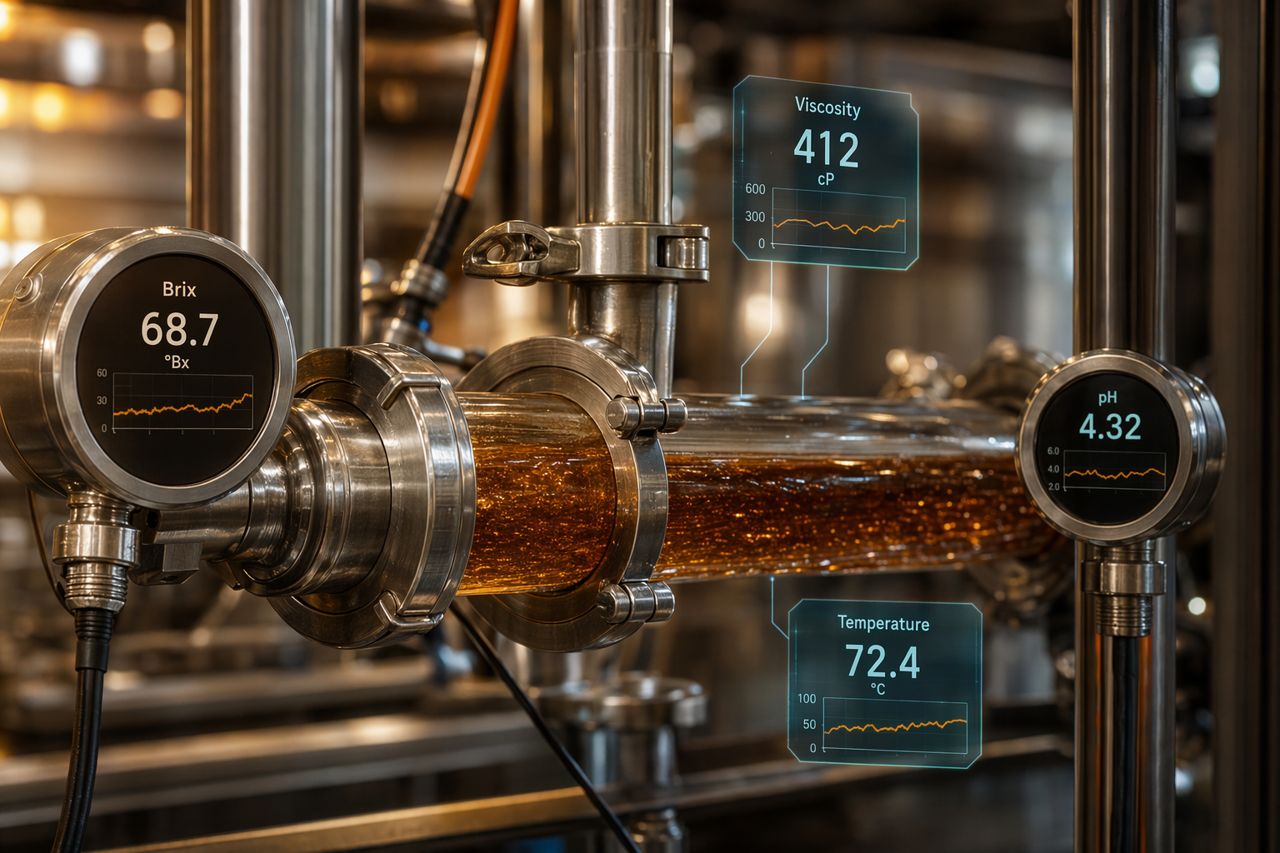
- Treating Brix as the main performance indicator
- Allowing carbohydrate profile drift that affects attenuation
- Using process severity to force conversion, increasing color or flavor risk
- Underestimating filtration sensitivity in downstream brewing use
If the customer is a brewer, the syrup has to perform like a brewing raw material.
BrixPilot’s role in brewery syrup production
BrixPilot supplies enzyme solutions for industrial syrup plants that need stable, repeatable conversion. For brewery adjunct syrup manufacturers, that means enzyme programs built around uptime, fermentability targets, viscosity control, filtration behavior, and reliable tanker release.
We support practical production needs, including:
- Alpha-amylase selection for liquefaction viscosity control
- Saccharification enzyme programs for fermentability targeting
- Debranching strategies where higher conversion is required
- Process-fit guidance for pH, temperature, dosing point, and residence time
- Troubleshooting for slow filtration, variable Brix correction, and off-spec batches
- Supply continuity for plants that cannot afford enzyme uncertainty
The practical takeaway
Brewery adjunct syrup and confectionery syrup are not interchangeable specifications. One is built primarily for fermentation performance and process predictability. The other is often built for sweetness, body, texture, and finished-product behavior.
For a brewing adjunct syrup manufacturer, the enzyme program is one of the main levers for holding that difference under control. The right supplier helps you protect conversion consistency, tanker quality, and customer confidence.
If you are reviewing a brewery adjunct syrup spec or qualifying an enzyme supplier for brewing syrup production, BrixPilot can help you map enzyme selection to your real operating window.
Ready to tighten fermentability, viscosity, and tanker consistency? Request a quote through the on-site form and tell us your starch source, target syrup profile, and current process constraints.