Enzyme for Brewery Adjunct Syrup Fermentability
Breweries buying adjunct syrup are not just buying Brix. They are buying predictable attenuation contribution, consistent fermentability, and a sugar profile that fits their brewhouse and fermentation plan.
BrixPilot supplies enzyme solutions for brewing adjunct syrup manufacturers that need dependable conversion from starch-based feedstocks into clear, pumpable, specification-ready syrup. We support plants producing adjunct syrups for lager, high-gravity brewing, and other brewery applications where fermentability, viscosity, DE range, and shipment consistency matter.
If your customer’s fermentation performance changes from tanker to tanker, the problem often starts upstream: liquefaction control, dextrin breakdown, saccharification balance, or filtration drag. BrixPilot helps you tighten that process window.
Built for syrup suppliers serving brewery specifications
Brewing adjunct syrup has to behave predictably in the brewery. That means the syrup manufacturer must control more than solids content. The enzyme program has to support the customer’s target for fermentable sugars, residual dextrins, viscosity, clarity, and batch-to-batch repeatability.
BrixPilot works with plants that need enzyme supply for:
- Consistent fermentability for brewery attenuation targets
- Sugar profile control across glucose, maltose, maltotriose, and dextrin fractions
- Lower viscosity through liquefaction and saccharification
- Improved filtration and clarification behavior
- Stable tanker-to-tanker quality for brewery customers
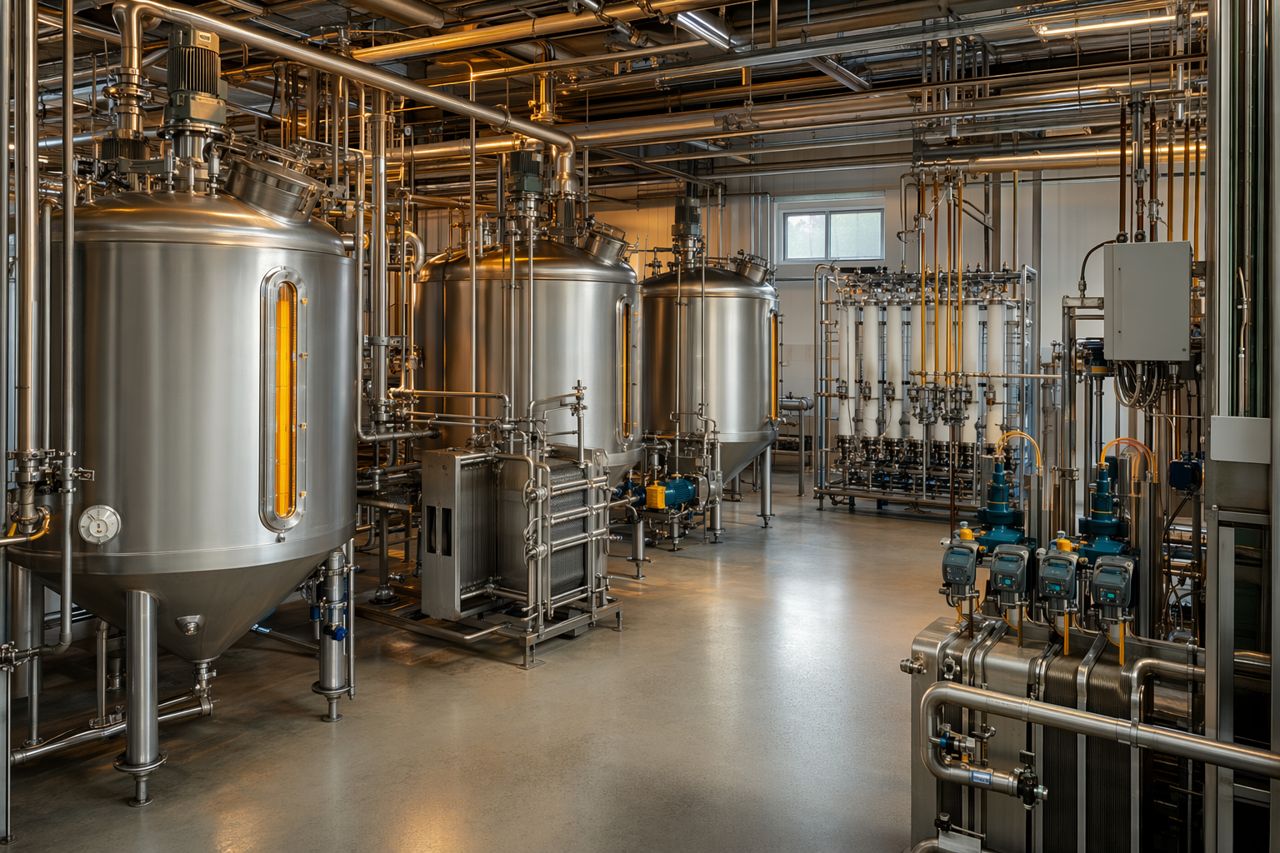
- Reliable dosage handling in continuous or batch production
- Fewer process interruptions caused by slow conversion or heavy syrup handling
Enzyme systems for fermentability control
Different brewery adjunct syrup targets require different conversion strategies. BrixPilot can support enzyme selection for each stage of starch processing, from liquefaction through final saccharification.
Liquefaction support
A controlled liquefaction step helps reduce viscosity early, improves mixing, and prepares starch for downstream conversion. For adjunct syrup plants, this can mean smoother heat transfer, reduced pump strain, and more predictable saccharification performance.
Saccharification for target fermentability
Saccharification is where brewery-facing specifications are won or lost. Depending on the required profile, enzyme selection may focus on higher glucose formation, maltose-rich profiles, broader dextrin conversion, or controlled residual body.
BrixPilot helps align enzyme choice with the syrup specification instead of pushing a one-size-fits-all conversion target.
Dextrin management
Residual dextrins affect fermentability, viscosity, and brewery performance. Where a brewery requires higher attenuation contribution, dextrin management becomes critical. BrixPilot can support enzyme programs designed to open branch points and improve conversion efficiency without sacrificing plant practicality.
What plant managers care about: uptime, flow, and repeatability
A good enzyme program does not only look good on a lab sheet. It has to work in the plant.
BrixPilot focuses on the operational details that matter on a syrup line:
- Fast, predictable viscosity drop after liquefaction
- Stable conversion behavior across feedstock variation
- Practical dosing that fits existing tanks, skids, and automation
- Reduced risk of slow filtration, haze, or heavy recirculation loads
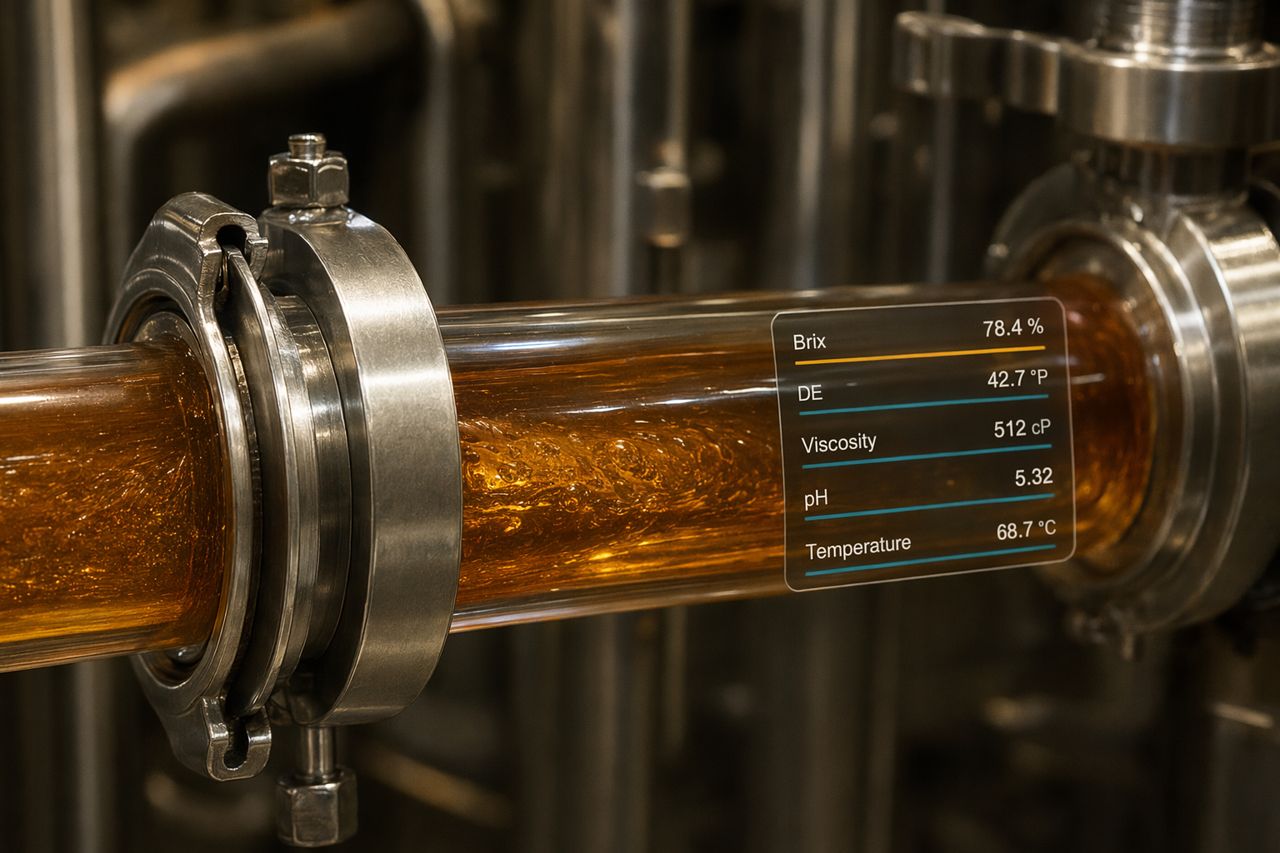
- Better control of Brix, DE, pH, temperature, and residence time relationships
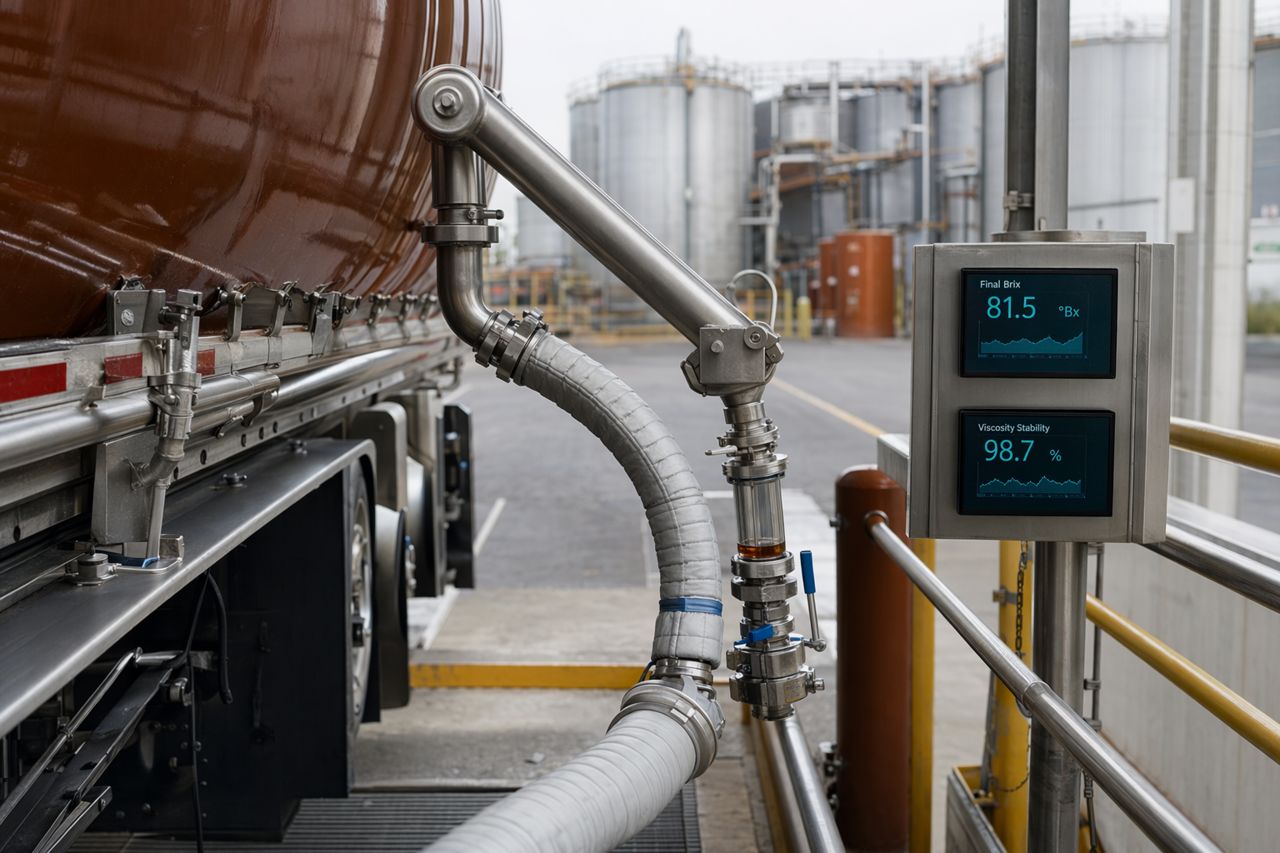
- Repeatable syrup properties at loading, not just during intermediate checks
The goal is fewer surprises between the saccharification vessel and the tanker bay.
Support for brewing customer requirements
Breweries may specify adjunct syrup by fermentability, apparent attenuation contribution, carbohydrate distribution, solids, color, pH, microbiological expectations, and handling behavior. When those requirements tighten, enzyme choice becomes a commercial risk-control decision.
BrixPilot supports manufacturers that need to:
- Match a brewery-approved syrup profile consistently
- Adjust fermentability without destabilizing viscosity or filtration
- Reduce off-spec batches before shipment
- Maintain process performance when corn, rice, wheat, or other starch inputs vary
- Scale from trial production to regular tanker supply
- Document a stable technical approach for brewery procurement and quality teams
Why choose BrixPilot as your enzyme supplier for brewing syrup production
BrixPilot is built for industrial syrup operations, not generic ingredient catalogs. We speak in terms of tanks, transfer lines, residence time, solids load, conversion targets, and customer release specifications.
Working with BrixPilot gives your team:
- Enzyme recommendations matched to syrup application and brewery expectations
- Practical guidance for liquefaction, saccharification, and dextrin conversion strategy
- Supply consistency for routine production planning
- Technical discussion focused on process outcomes, not abstract bench claims
- A clear path from quote to plant trial to production supply
Typical use cases
BrixPilot enzyme solutions are relevant for manufacturers producing:
- High-fermentability brewing adjunct syrup
- Glucose-rich adjunct syrup for brewery use
- Maltose-balanced adjunct syrup
- Syrup for high-gravity brewing applications
- Custom carbohydrate profiles for brewery-approved specifications
- Starch-derived adjunct streams requiring viscosity and filtration improvement
Process checkpoints we help optimize
A fermentability-driven syrup program should be evaluated across the full process, not one isolated tank. BrixPilot can help your team review:
- Feedstock variability and starch preparation
- Liquefaction temperature and pH window
- Viscosity behavior before and after liquefaction
- Saccharification time, temperature, and target sugar profile
- Dextrin conversion requirements
- Filtration or clarification load
- Final Brix, DE, pH, and shipment behavior
- Brewery feedback on fermentability and attenuation contribution
Request a quote for your adjunct syrup line
If you manufacture brewing adjunct syrup and need tighter fermentability control, BrixPilot can help you select an enzyme approach that fits your process and customer specification.
Use the on-site form to share your feedstock, target syrup profile, production format, and current bottleneck. We will respond with a practical quote pathway for your plant.